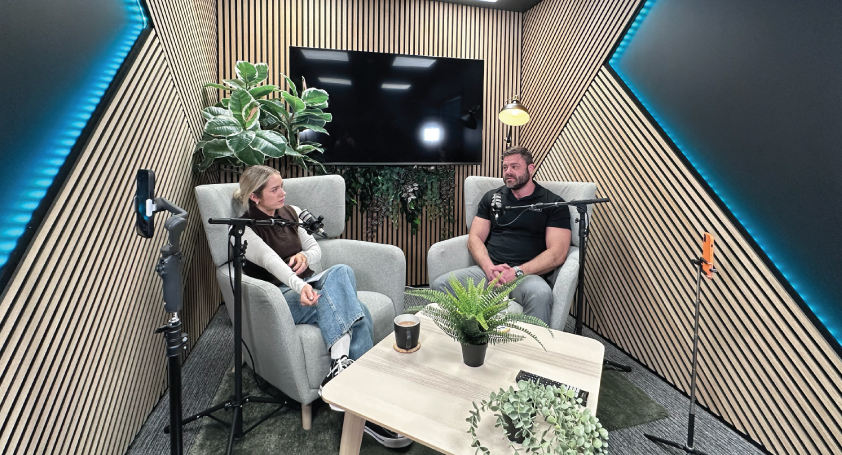
Introducing Our New Podcast: First Impressions We are thrilled to announce the launch of our new...
For many orthodontic practices, bringing laboratory production in-house appears to offer an attractive commercial opportunity. Greater control over manufacturing, reduced reliance on third-party suppliers and the prospect of improving margins can make the model seem like a logical next step for a growing practice.
However, when viewed through the lens of return on investment (ROI), the business case becomes far less straightforward.
Establishing an in-house digital laboratory requires significant capital expenditure. Practices must invest in dental-grade 3D printers, post-processing equipment, CAD software licences, design workstations, materials, maintenance contracts and quality assurance systems. Beyond the initial purchase, these assets require ongoing investment through software subscriptions, servicing, consumables and periodic technology upgrades as digital manufacturing continues to evolve.
Technology depreciation is an often-overlooked factor. Digital dentistry continues to advance rapidly, with manufacturers regularly introducing faster printers, improved materials and more sophisticated software. Equipment purchased today may require replacement or upgrading within three to five years to remain competitive, meaning practices must continually reinvest to maintain efficiency and access the latest capabilities. The true cost of ownership therefore extends well beyond the initial purchase price.
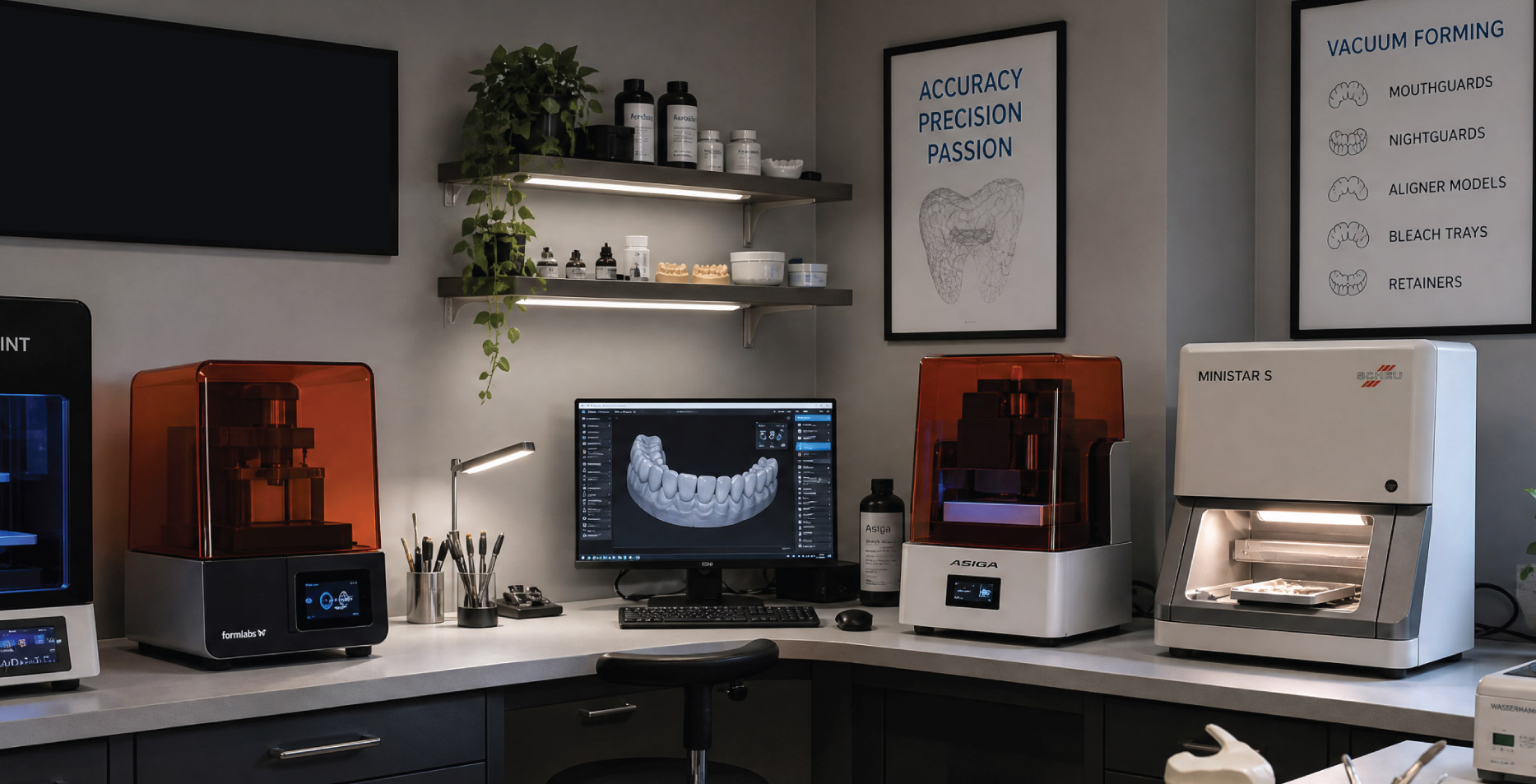
The challenge is not simply the cost, it's whether those investments generate the highest return for the practice.
Capital tied up in laboratory infrastructure is capital that cannot be invested elsewhere. Whether expanding surgeries, recruiting clinicians, introducing new treatment options, enhancing the patient experience or investing in marketing, every investment carries an opportunity cost. For many practice owners, these initiatives are more likely to generate sustainable growth and a stronger financial return than owning and operating manufacturing equipment.
Staffing presents an equally important consideration. According to the General Dental Council (GDC), there were just 5,025 registered dental technicians in the UK in 2024, representing the fifth consecutive annual decline and a reduction of almost 10% since 2020. At the same time, the number of registered dental professionals continues to grow, increasing demand for an already limited pool of technical expertise.
Recruiting experienced CAD technicians is therefore becoming increasingly competitive, while retaining those skills represents an ongoing operational cost that extends well beyond salary alone.
Even with the right people and technology in place, achieving a strong return on investment depends on maintaining consistently high production volumes.
This is where utilisation risk becomes critical. High-value manufacturing equipment delivers the greatest return when it is operating close to capacity. Specialist laboratories achieve this by producing appliances for hundreds of practices every day, maximising equipment usage and spreading costs across thousands of cases. By contrast, an individual orthodontic practice is likely to experience fluctuating case volumes throughout the year. Busy periods can create production bottlenecks and delays, while quieter periods leave expensive equipment and specialist staff underutilised. The fixed costs remain regardless of output, making it considerably harder to achieve the economies of scale needed to justify the investment.
Running a laboratory also introduces an entirely new business function. Production scheduling, software management, printer maintenance, regulatory compliance, stock control and quality assurance all require time and oversight. Every hour spent managing laboratory operations is time that cannot be devoted to patient care, clinical leadership or business development.
That is not to say that in-house laboratories are never the right solution. For very large orthodontic groups, corporate providers or practices with exceptionally high and predictable case volumes, an in-house laboratory can offer genuine advantages. Sufficient throughput can improve equipment utilisation, justify dedicated technical teams and provide greater control over production scheduling and workflow. Practices with the scale to continuously invest in technology and technical expertise may successfully realise the efficiencies that make the model commercially viable.
For the majority of independent practices, however, these conditions are difficult to achieve. Variable demand, ongoing recruitment challenges and the pace of technological change make it difficult to consistently generate the utilisation levels needed to deliver an attractive return on investment.
Specialist orthodontic laboratories, by comparison, are purpose-built to manage these complexities. By spreading investment across thousands of appliances each year, they benefit from economies of scale that individual practices simply cannot replicate. Continuous investment in technology, dedicated technical teams and validated manufacturing processes allow them to deliver consistently high-quality appliances while maintaining efficient turnaround times.
From an ROI perspective, outsourcing transforms laboratory production from a significant fixed cost into a predictable variable cost.
From an ROI perspective, outsourcing transforms laboratory production from a significant fixed cost into a predictable variable cost. Rather than committing substantial capital to equipment, staffing and infrastructure, practices pay only for the appliances they require. This improves cash flow, reduces financial risk and provides greater flexibility as demand changes, while ensuring access to continually evolving technology without the burden of ownership.
As NHS England continues to highlight recruitment and retention challenges across the dental workforce, many practice owners are reassessing where their investment delivers the greatest long-term value. Increasingly, the conclusion is that competitive advantage lies not in owning manufacturing equipment, but in focusing resources on clinical excellence, patient experience and sustainable practice growth.
The question is no longer whether an orthodontic practice can operate its own laboratory. It is whether doing so represents the best return on capital, management time and clinical expertise.
For many practices, partnering with a specialist orthodontic laboratory is not simply an outsourcing decision, it is a strategic investment that protects profitability, reduces operational complexity and provides access to world-class manufacturing expertise, allowing clinicians to focus on what they do best: delivering exceptional patient care.
Sources:
- General Dental Council. Registration Statistical Report 2024.
https://www.gdc-uk.org/docs/default-source/reports-and-publications/gdc-registration-statistics-report-2024.pdf - General Dental Council. GDC reports increase in registered dental professionals.
https://www.gdc-uk.org/news-blogs/news/detail/2025/04/24/gdc-reports-increase-in-registered-dental-professionals - NHS England. Dental Workforce Statistics.
https://www.england.nhs.uk/statistics/statistical-work-areas/dental-workforce/